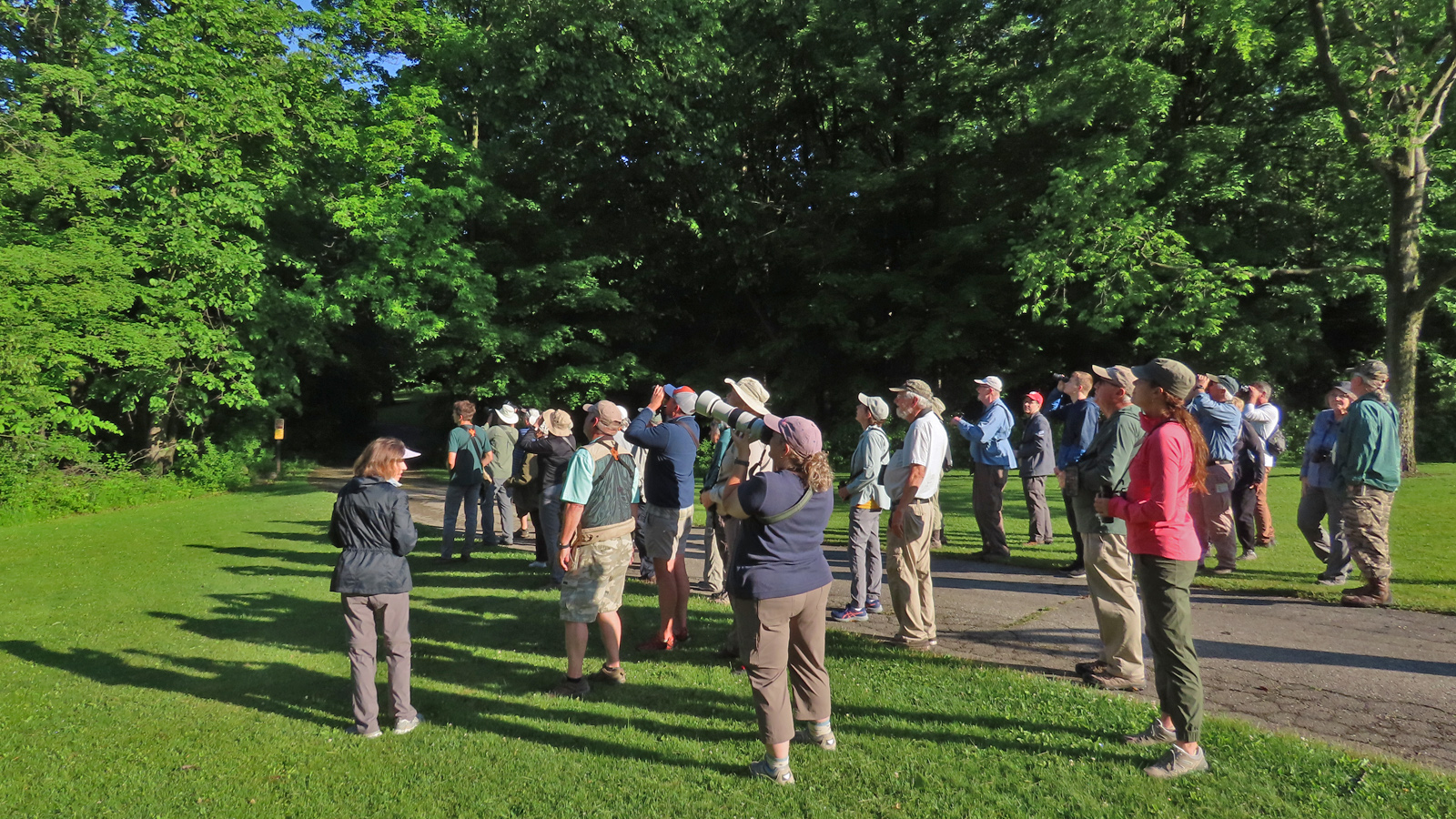
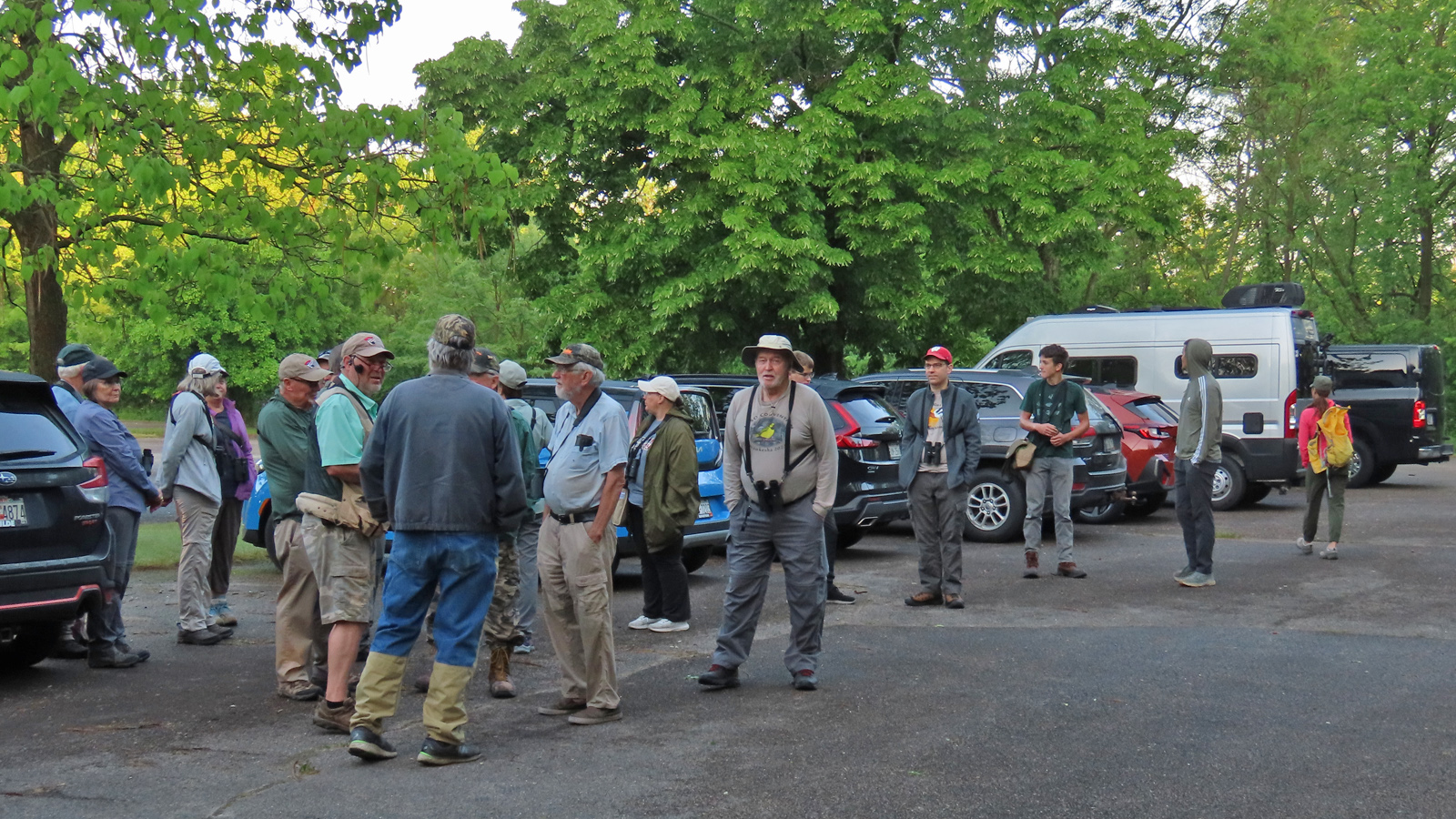
On Saturday, June 6, at 6:00 AM, 35 people met at Long Lake Recreation Area for WSO’s annual Kettle Moraine State Forest – Northern Unit field trip. The weather was good, with mostly clear skies, very light wind, and temperatures in the mid-60s. Our route for the day included: Long Lake Recreation Area, Dundee Sportsman Club entrance, Jersey Flats Prairie Restoration Area, Auburn Lake Road, New Prospect Horse Riders Camp, Haushalter Lane, Forest Lake Public Access, Mauthe Lake Recreation Area, Forest View Grasslands, and Spruce Lake Bog. Google Maps link: 2026 WSO KMSF-NU Field Trip Sites
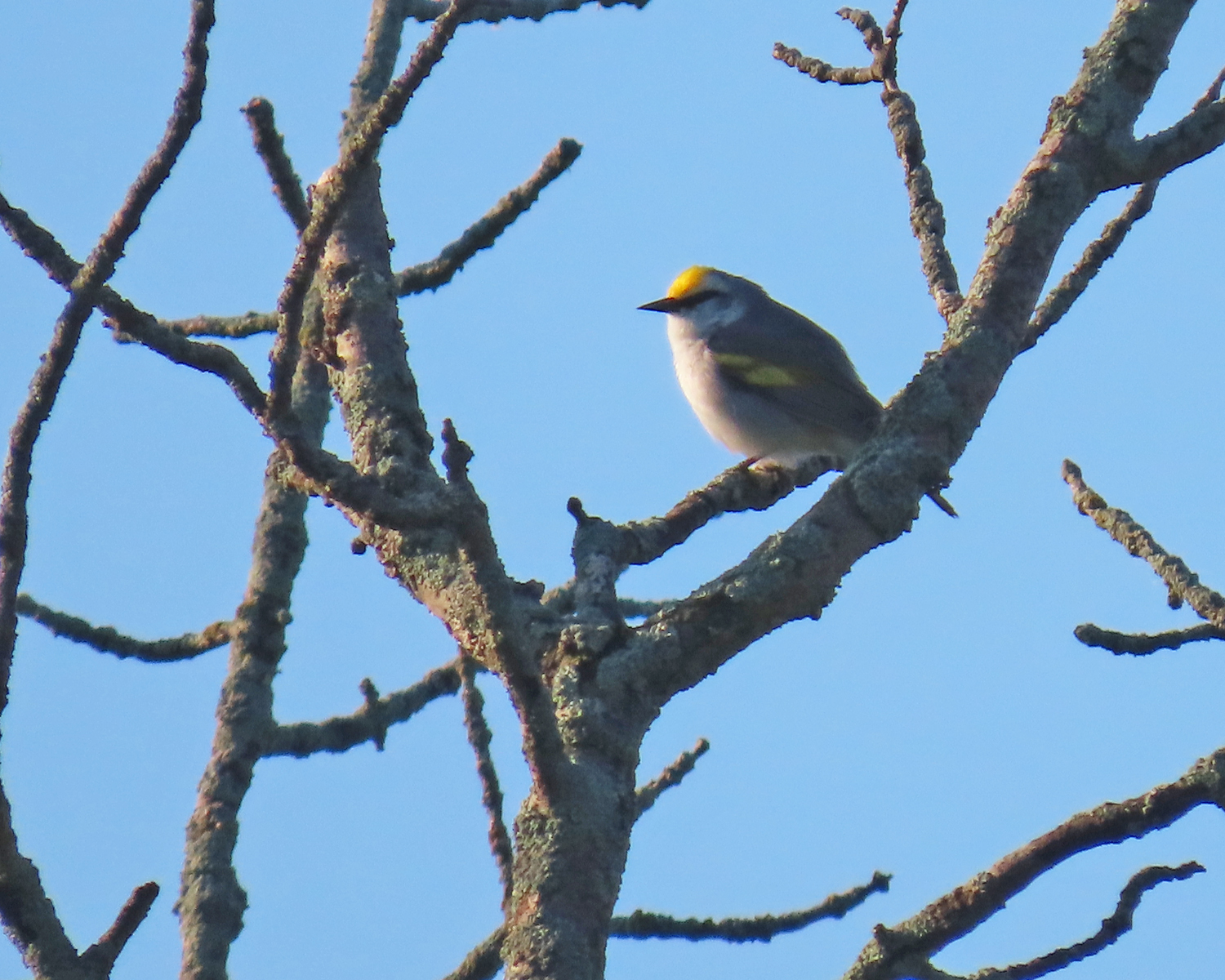
After carpooling at the North Beach parking area of Long Lake Recreation Area, our group took a short walk along the road to our first stop. On May 20, I found a Yellow-breasted Chat here, and it had been hanging around this spot since then. It didn’t take long before we heard its unusual song, a jumble of harsh clucks, rattles, clear whistles, and squawks. We only got brief views as it moved from one singing perch to another in dense thicket. At one time, this species was considered a warbler species, but it now belongs to the monotypic family Icteriidae. The only member in this family. Another target species here was Brewster’s Warbler. This is the typical hybrid of the Blue-winged and Golden-winged Warblers, and this bird has returned to this location for the last 4 years. I’m pretty sure it’s the same bird because it's been singing the same Golden-winged Warbler song every year. Other species here were a flyover Wood Duck, Chimney Swift, Ruby-throated Hummingbird, heard Sandhill Cranes, Green and Great Blue Heron, heard a Barred Owl, Alder Flycatcher, Eastern Kingbird, Purple Martin, Gray Catbird, Eastern Bluebird, Eastern Bluebird, Veery, Field Sparrow, Eastern Towhee, Baltimore Oriole, Blue-winged Warbler, Northern Yellow Warbler, American Redstart, Scarlet Tanager, Rose-breasted Grosbeak, and Indigo Bunting.
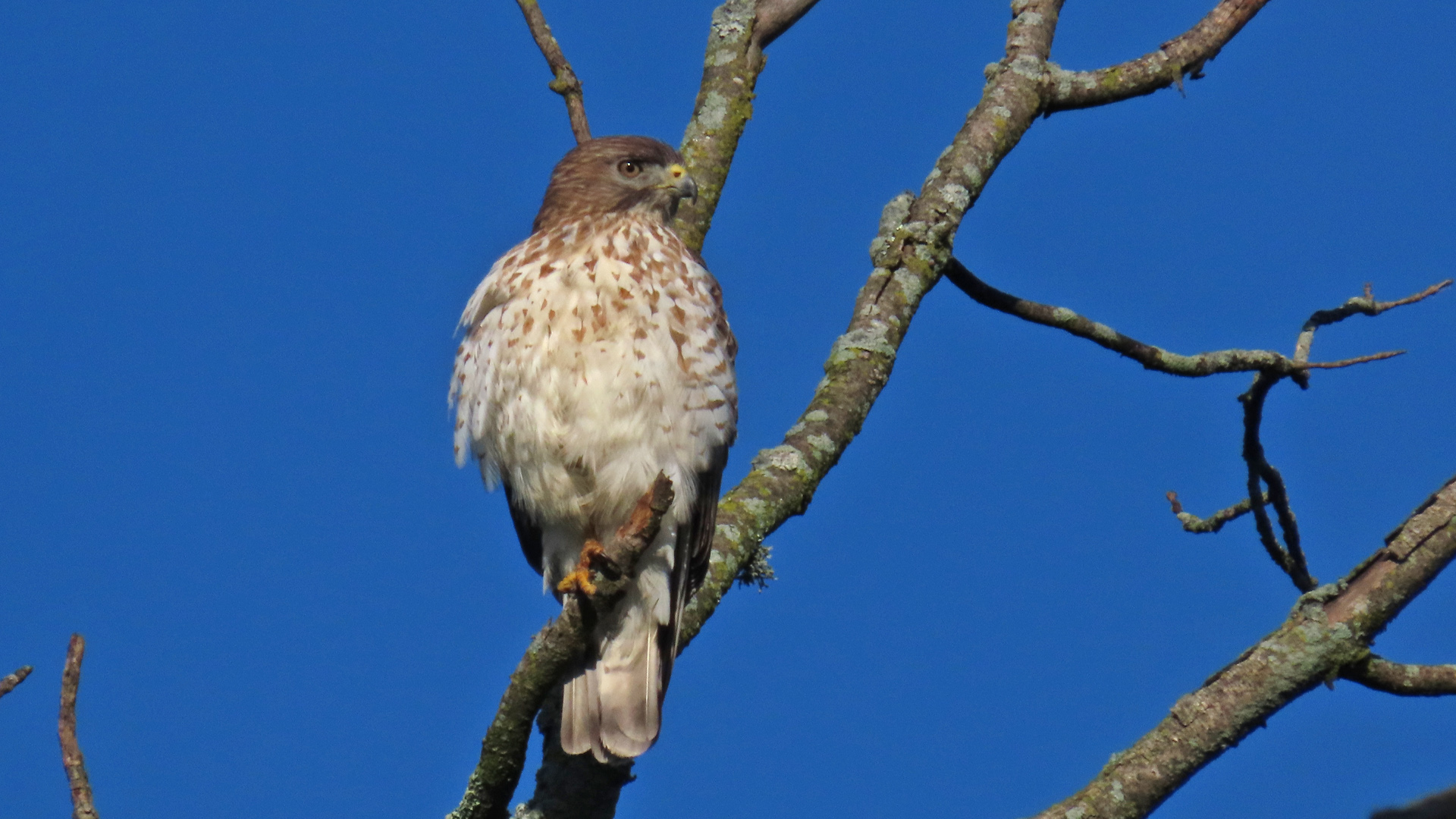
Upon returning to our cars, we headed to the lower beach parking area. Before meeting the group this morning, I did some last-minute scouting for the Canada Warbler I had seen the day before near the beach area. Unfortunately, it must have moved on or was not actively singing. However, an even better bird for the KMSF-NU was singing, a Louisiana Waterthrush. But when our group got to this spot, the bird was not singing. We only heard its metallic call note and got a brief look at this secretive species as it flew by. Other notable species here were: a brief look at a fly-away Red-shouldered Hawk, great looks at a pair of Broad-winged Hawks, Great Horned Owl, Red-bellied and Hairy Woodpeckers, Northern Flicker, Eastern Wood-Pewee, Eastern Phoebe, Great Crested Flycatcher, Eastern Warbling and Red-eyed Vireos, Blue-gray Gnatcatcher, Northern House Wren, Chipping Sparrow, and others. We tallied 55 species at Long Lake Recreation Area.
After our successful stop at Long Lake Rec Area, one of the traditions for this trip is to stop at the Dundee Sportsman Club to view the Ospreys at their nesting platform. A pair has used this spot to raise their young for almost 30 years. As has been the case over the years, a pair was sitting on the nest tending their young when we arrived. Other new species added here were Killdeer, Turkey Vulture, Northern Rough-winged Swallow, Cedar Waxwing, and House Finch. We had 34 species here.
Our next stop was Jersey Flats Prairie Restoration Area, on CTH SS just west of New Prospect. After getting out of our cars, we heard the buzzy song of a Clay-colored Sparrow. This site is usually one of the best locations in the KMSF for Henslow’s Sparrow. We finally heard one and got scope views of the bird not far off the trail. We also heard the musical trill of Field Sparrows and had good looks at Eastern Meadowlark. We had 18 species here.
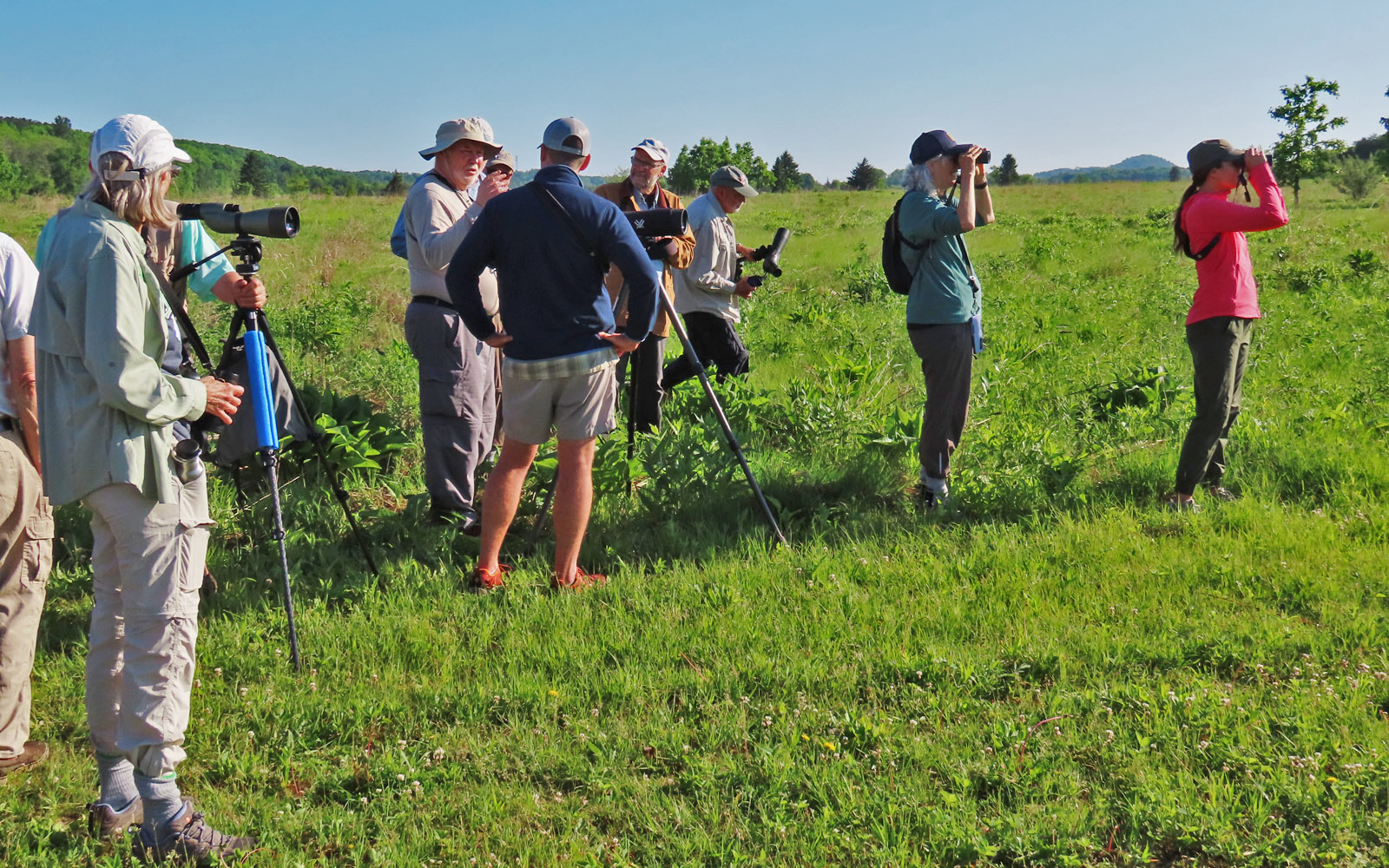
Our next site was along Auburn Lake Road. Here, we added 27 species, including two of our target species: Morning and Pine Warblers. Both birds were fairly cooperative, allowing great views. Other notables included: Yellow-throated Vireo, Red-breasted Nuthatch, and Wood Thrush.
Next was a quick stop at the entrance to the New Prospect Horse Riders Camp. For many years, we’ve had Hooded Warbler along Haushalter Lane, but this year, there has been a very cooperative bird hanging out at this spot. This location was exceptionally nice because the bird came out to the edge of the parking area for all to see. This quick stop produced 28 species in all.
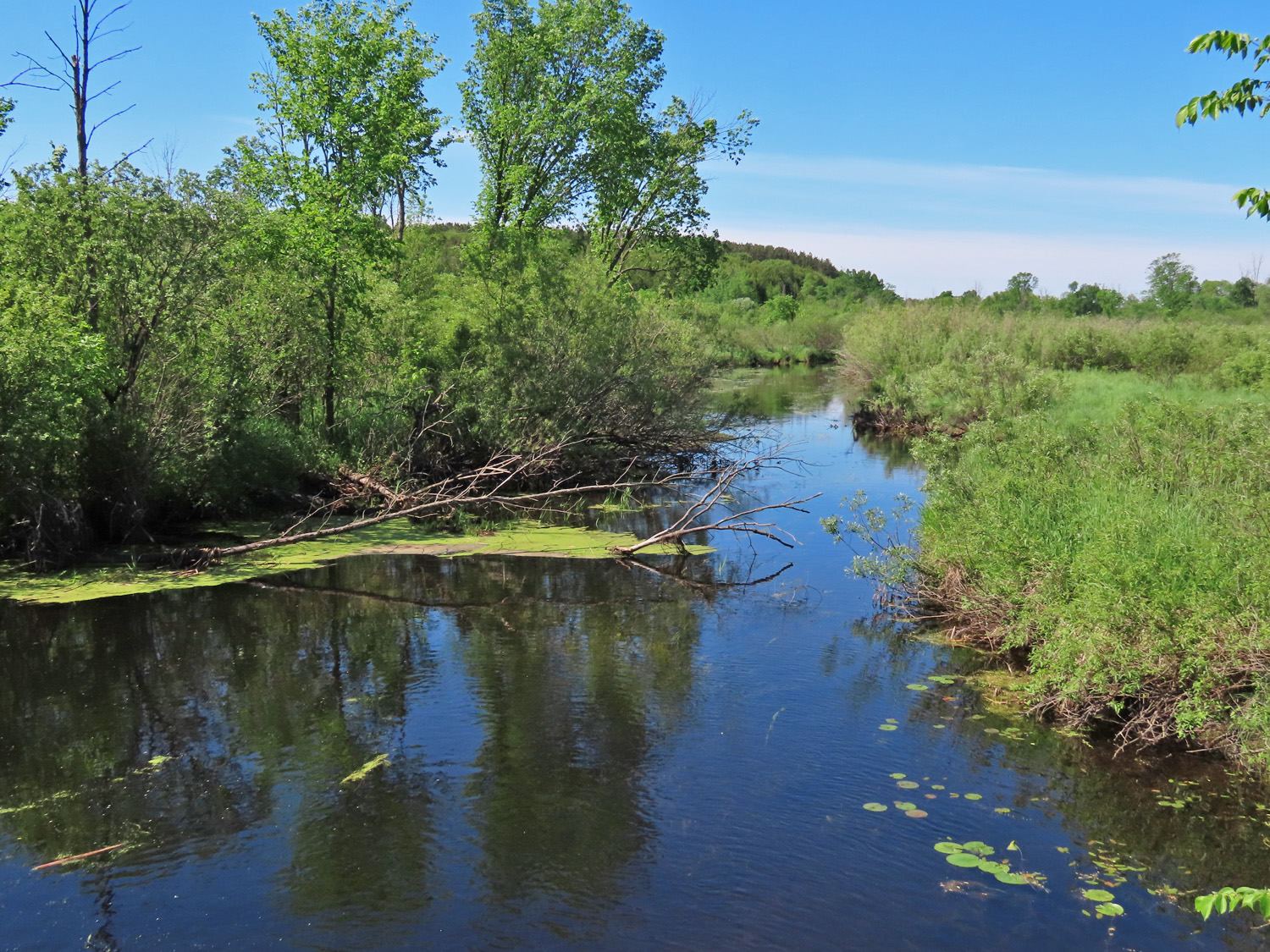
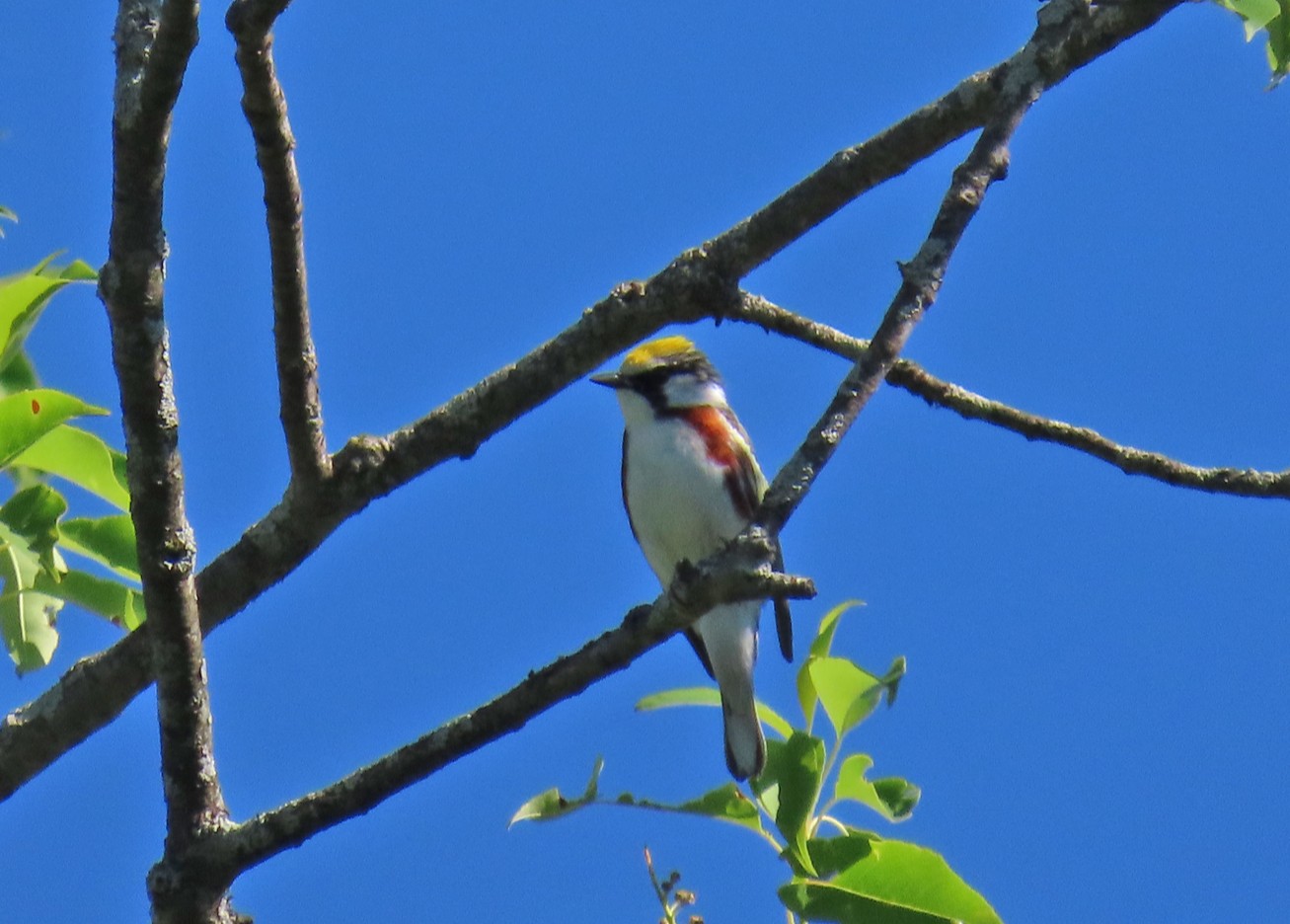
Haushalter Lane is often a very productive site for this trip. We had 46 species along this road. Nearly all of these are summer residents. Notables included: Red-shouldered Hawk, Hairy Woodpecker, Acadian, and Alder Flycatchers, Ovenbird, Blue-winged, Mourning, Hooded, Northern Yellow, and Chestnut-sided Warblers. As far as I’m concerned, the pair of Common Ravens we heard and saw was our best birds of the day. This is a very rare species in southeastern Wisconsin. However, this species seems to be moving further south of its normal breeding range in recent years.
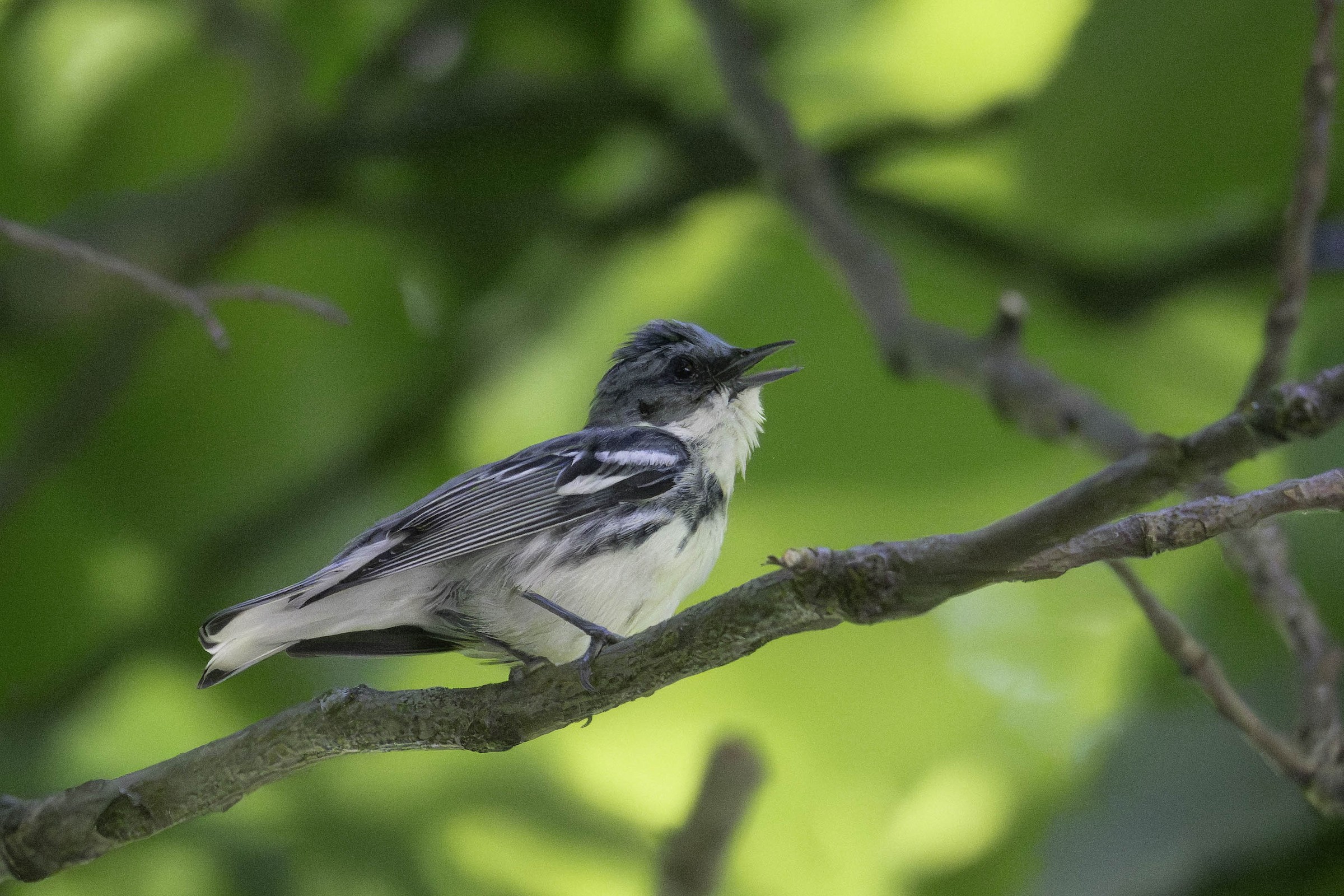
Our next stop was at the Forest Lake Public Access along County Highway GGG. Cerulean Warbler, a Wisconsin threatened species, was our target bird here. This species has been in decline in the KMSF for several years and is becoming increasingly difficult to find. But just before we arrived at the entrance to the parking area, I heard our bird singing. So, after parking, we finally had great looks at our target bird low in the canopy. In fact, we had both a male and a female in view. We also had a cooperative singing Scarlet Tanager in view across the road. We had 24 species here.
Mauthe Lake Recreation Area was our next stop. Our first stop was at the small pond just east of the contact station. Here we had Canada Goose, Wood Duck and her family, and several Mallards. It was after 11 AM, and our group decided to have our lunch in the picnic area. While eating our lunch near the lake, we added Ruby-throated Hummingbird, Great Egret, Belted Kingfisher, Least Flycatcher, Yellow-throated, Eastern Warbling, and Red-eyed Vireos, Blue-gray Gnatcatcher, Baltimore Oriole, and several others. Also, while finishing up lunch, Bill Volkert presented a brief synopsis of a project he and I started in 2024. The project involved collecting data from nearly 500 separate 10-minute point counts within the borders of the KMSF-NU. During the summer of 2024, with the help of several local volunteers, we collected data on 116 species in the forest. There will be a future article in the Passenger Pigeon with more details and the results of this project. We had 49 species here at Mauthe Lake.
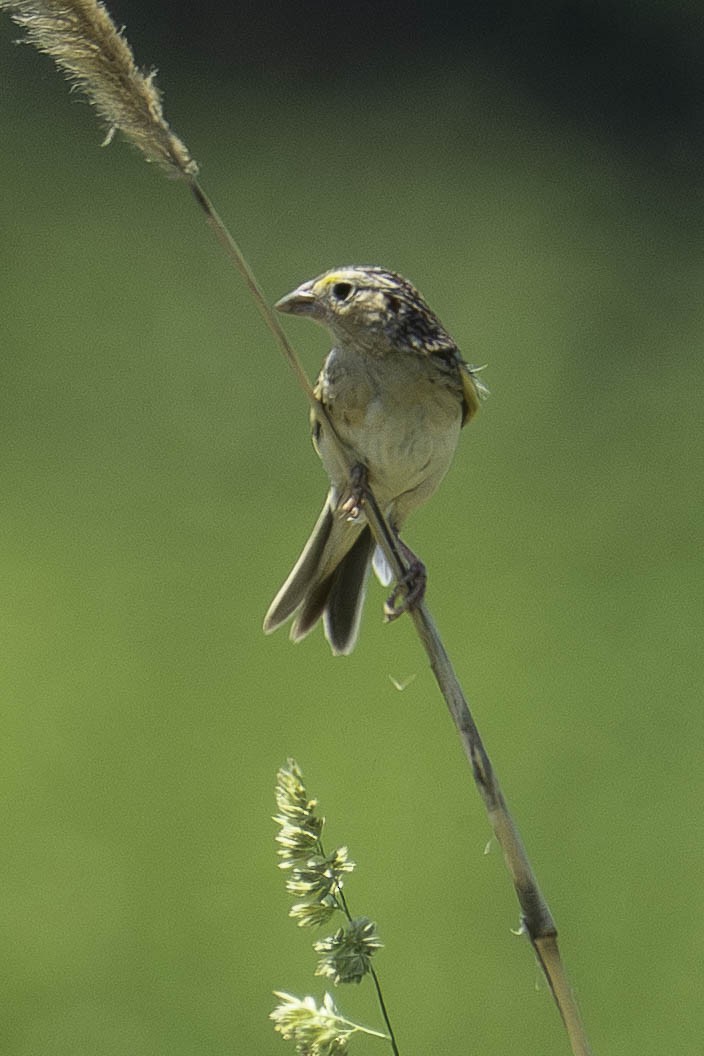
Our next stop was at Forest View Grasslands, a couple of miles south of Mauthe Lake Rec Area. This was a new location for this field trip, and our target species here was the Grasshopper Sparrow. Because the KMSF-NU has very little habitat for this species (short grass prairie), this grassland provides enough for these sparrows. Jersey Flats formerly had them, but without continued prairie burnings (management), it is no longer favorable. So, after parking our cars, we hiked about 0.25 miles to a field where these birds have been Summering for the past couple of years. I’ve had as many as 5-6 individuals here this year. Today we flushed one off the ground, and it flew to an exposed perch where we enjoyed great looks at this small, buffy, short-tailed, flat-headed sparrow. We could hear a couple of other individuals singing, but because these birds nest on the ground, we decided not to intrude any further and returned to the trail. Other species seen here were Wood Duck, Turkey Vulture, our 5th Red-shouldered Hawk of the day, Willow Flycatcher, Clay-colored Sparrow, Field Sparrow, Eastern Towhee, and our only Bobolink. We had 26 species here.
Our final stop of the day was at Spruce Lake Bog SNA. Here, the flora is often the attraction. With temperatures in the upper 70s, the bird life here was less active. We only had 14 species, but it was the bog plants that were in bloom that had us looking down. Plants like Pink Lady Slippers (moccasin flower), Pitcher Plant, Royal Fern, the floating sedge mat, Three-leaved Gold-thread, American Starflower, Partridgeberry, Common Winterberry, Leather-leaf, Bog-rosemary, Poison sumac, the yellow blue-bead lily, to name a few.
Our trip concluded here at Spruce Lake Bog at about 1:30 PM. We had a wonderful group (as always), during which we were able to see or hear 87 species. Here is the link to our entire day’s  eBird Trip Report.
Thanks to all who attended. We had a fantastic group, and it was a pleasure spending a morning with you all.
Jeff Baughman