Saturday, March 7, turned out to be quite mild for this time of year, with the temperatures ranging from 51 to 55 degrees. The skies were cloudy all morning, and there were a few intermittent light sprinkles at times, but they didn’t interfere too much with our birding. The wind was fairly strong, but since it was coming from a westerly direction, we were mostly protected from it.
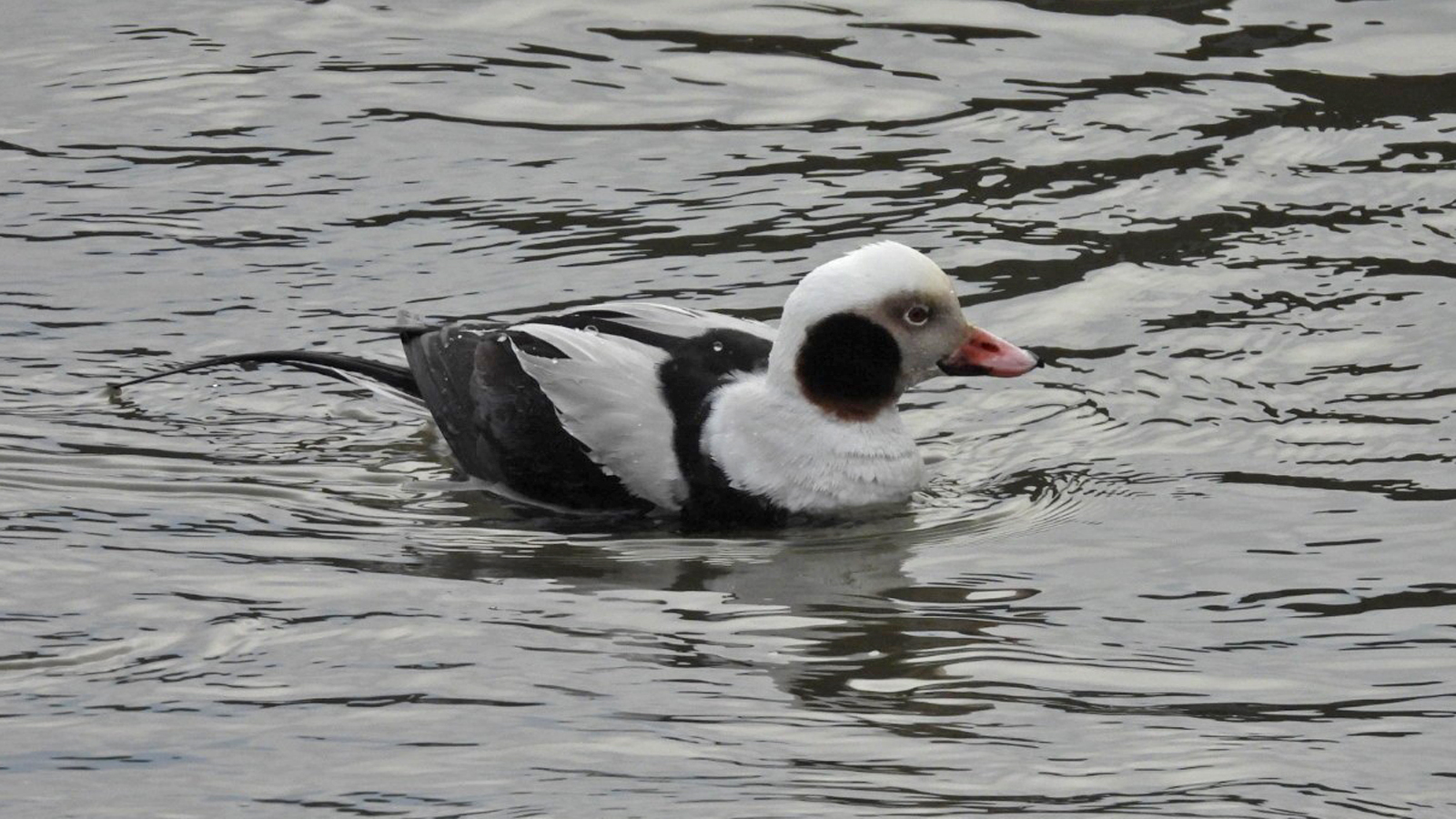
We gathered at 7:00 AM at the Sheboygan Marina, and we scanned through the ducks, finding MALLARD, GREATER and LESSER SCAUP, BUFFLEHEAD, COMMON GOLDENEYE, and COMMON and RED-BREASTED MERGANSERS. Several KILLDEER flew over, along with a few AMERICAN ROBINS and COMMON GRACKLES, and a NORTHERN CARDINAL and HOUSE FINCHES were singng nearby — giving us a nice taste of spring. At one point, a pair of NORTHERN SHOVELERS flew in, and later a beautiful male LONG-TAILED DUCK dropped in quite close to the shore, giving us very good looks!
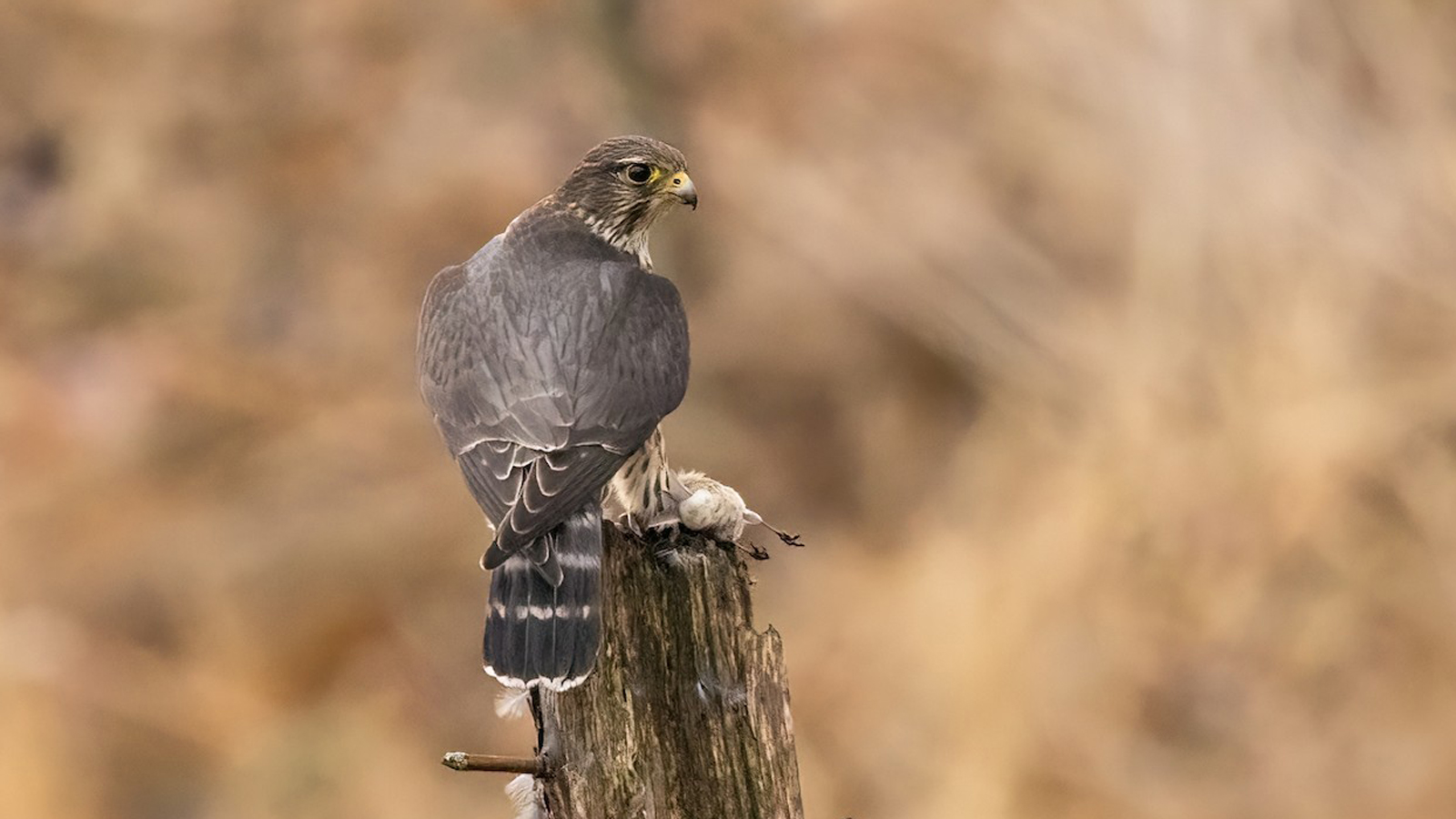
Our next stop was at North Point Park, and one of the first birds was spotted was a MERLIN! It was perched up high in a tree on the bluff, but on three occasions within about 20 minutes it suddenly took off and flew out over the lake — and each time it returned with a bird clutched in its talons. The first bird was a FOX SPARROW, the second appeared to be a HOUSE SPARROW, and the third prey item was a SONG SPARROW. Each time it would pluck the bird for a very short time, and then fly down to the ground and apparently cache its prey — perhaps for future consumption!
While scanning the lake we suddenly spotted three WHITE-WINGED SCOTERS flying by, and then one of them flew back and landed on the water. We were able to get decent scope views as it swam about and dove. Other waterfowl included CANADA GEESE, MALLARD, BUFFLEHEAD, COMMON GOLDENEYE, and RED-BREASTED MERGANSER. AMERICAN ROBINS, RED-WINGED BLACKBIRDS, COMMON GRACKLES, and NORTHERN CARDINAL were also spotted.
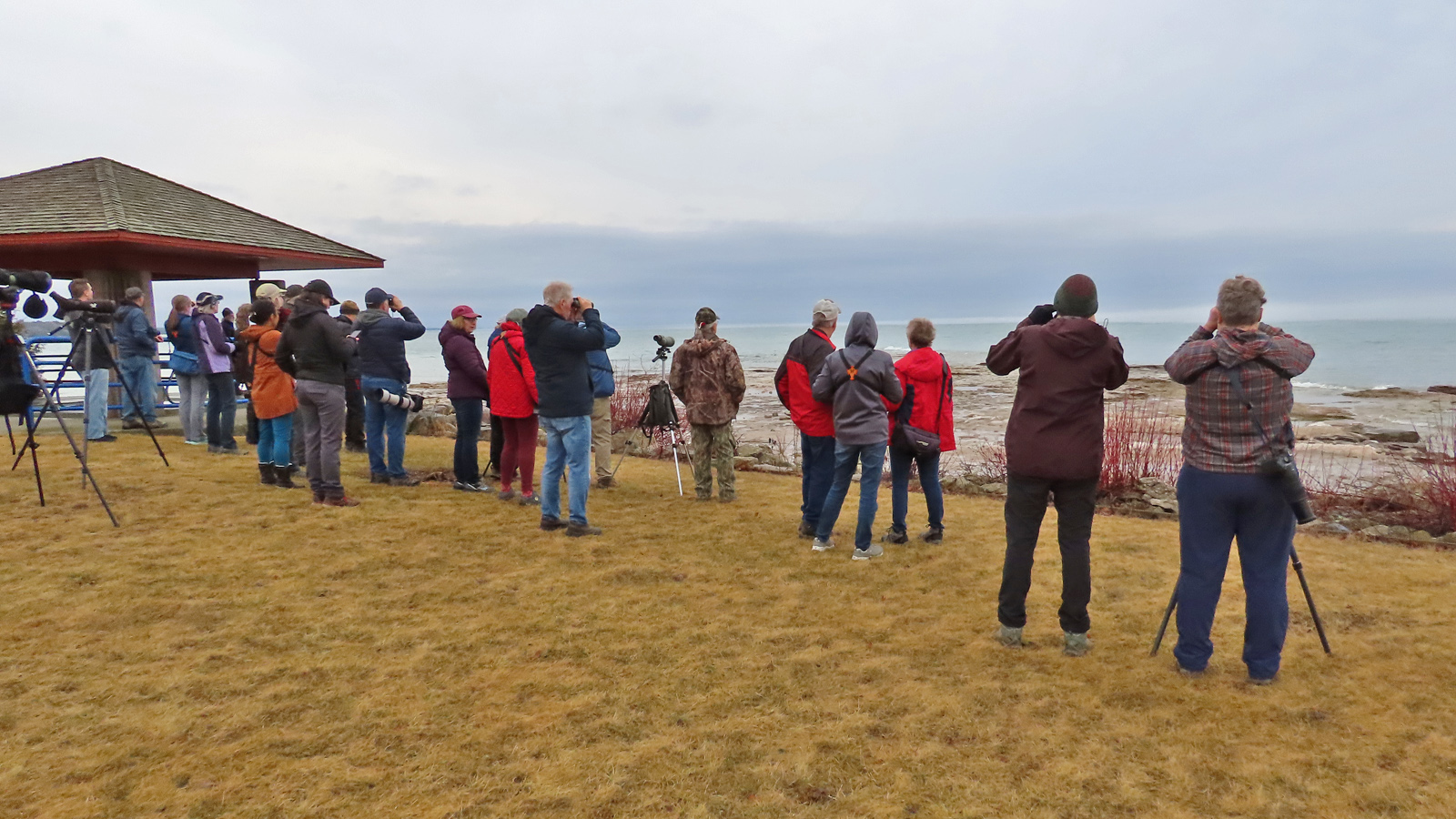
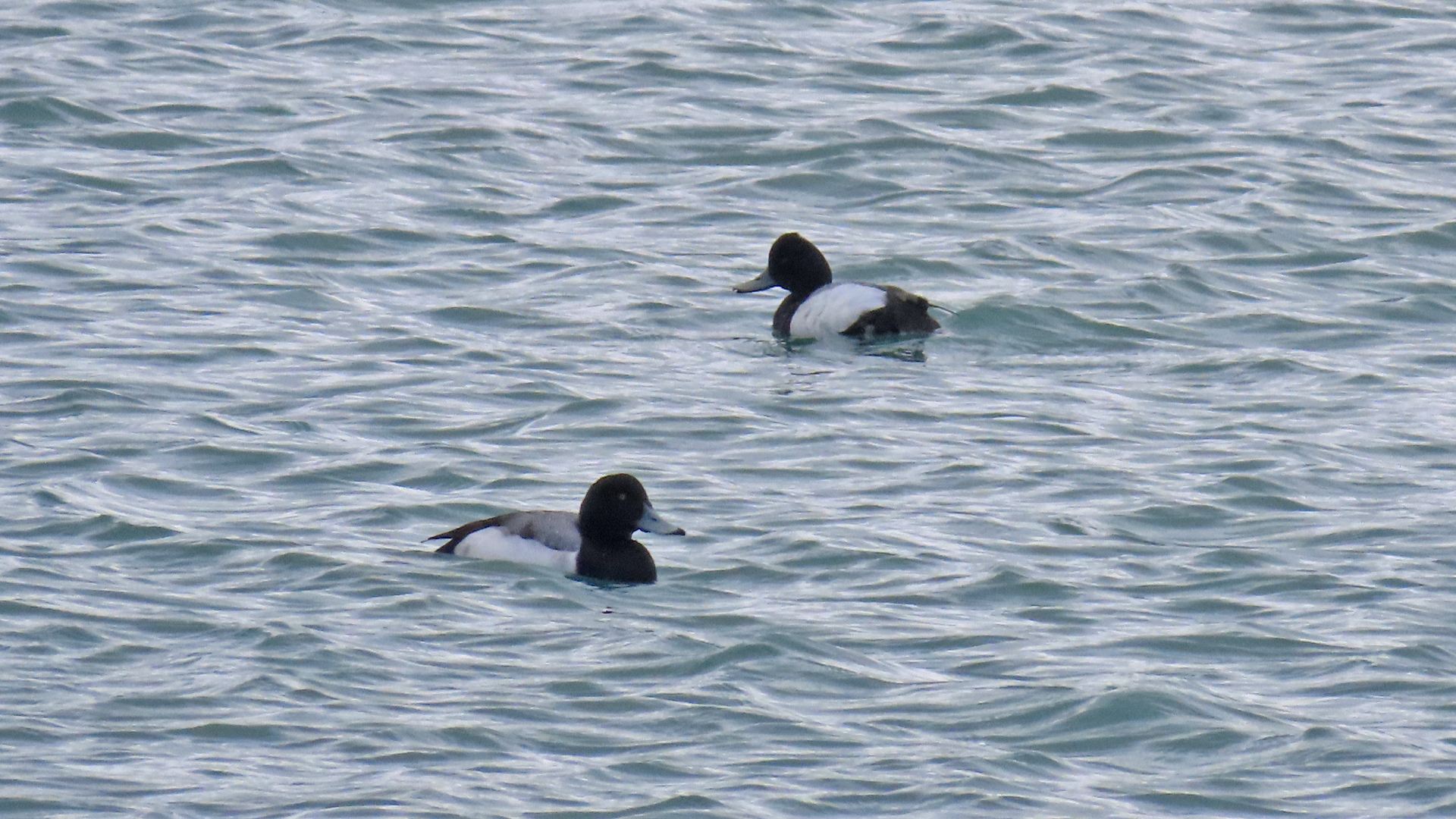
From there we drove south to a viewing area along the Sheboygan River and the Outer Harbor. Swimming in the river were REDHEADS, GREATER and LESSER SCAUP, BUFFLEHEAD, and RED-BREASTED MERGANSER. A few AMERICAN HERRING GULLS were present, along with MOURNING DOVE, AMERICAN ROBIN, HOUSE FINCHES, RED-WINGED BLACKBIRD, and COMMON GRACKLE.
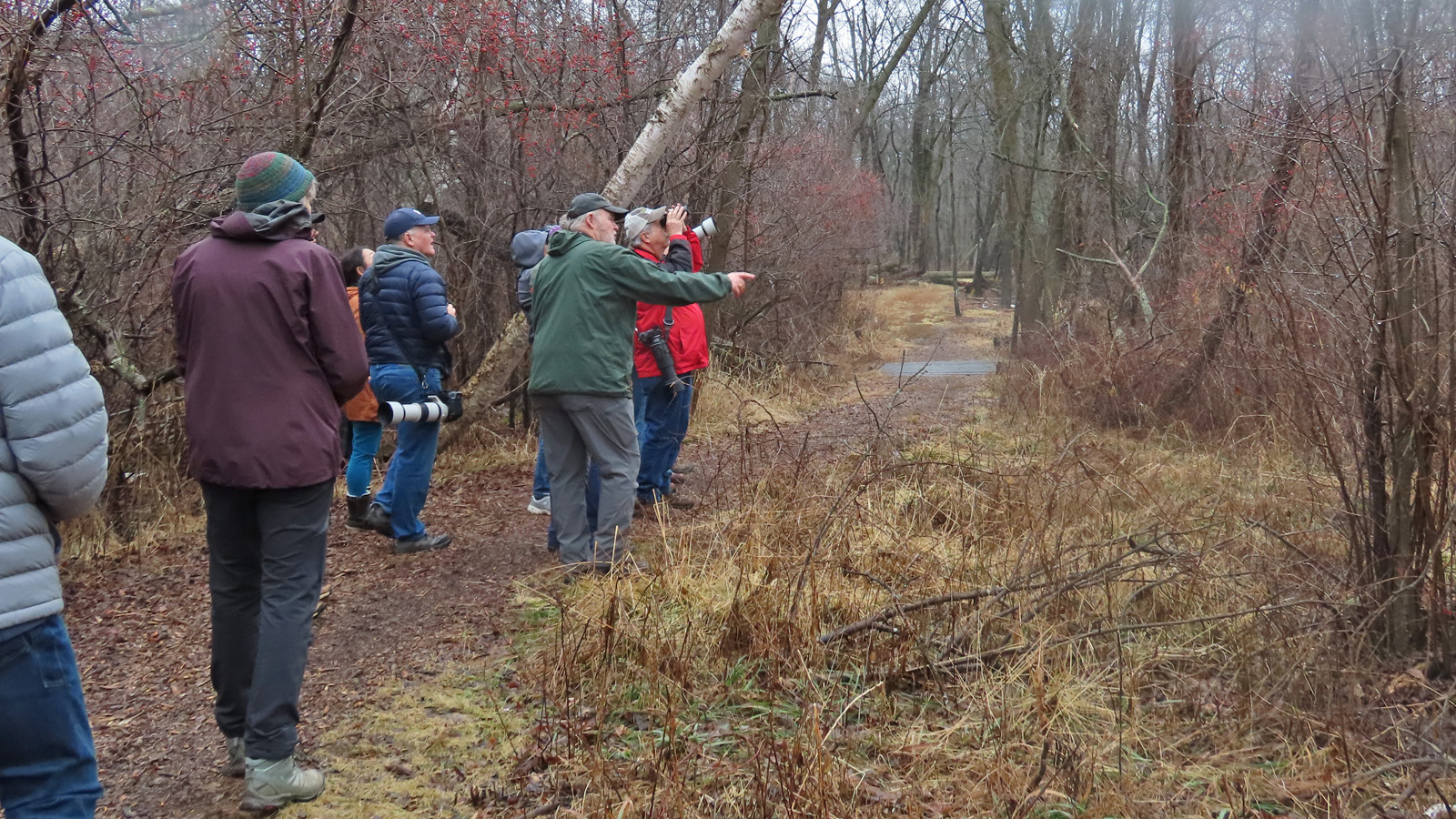
The group then caravaned down to Indian Mounds Park, where we parked and birded in the neighborhood — and wandered down to Henry Mueller Conservancy, which is where we spent most of our time. A number of DARK-EYED JUNCOS were present, along with a FOX SPARROW, a couple of SONG SPARROWS, and a lone AMERICAN TREE SPARROW.
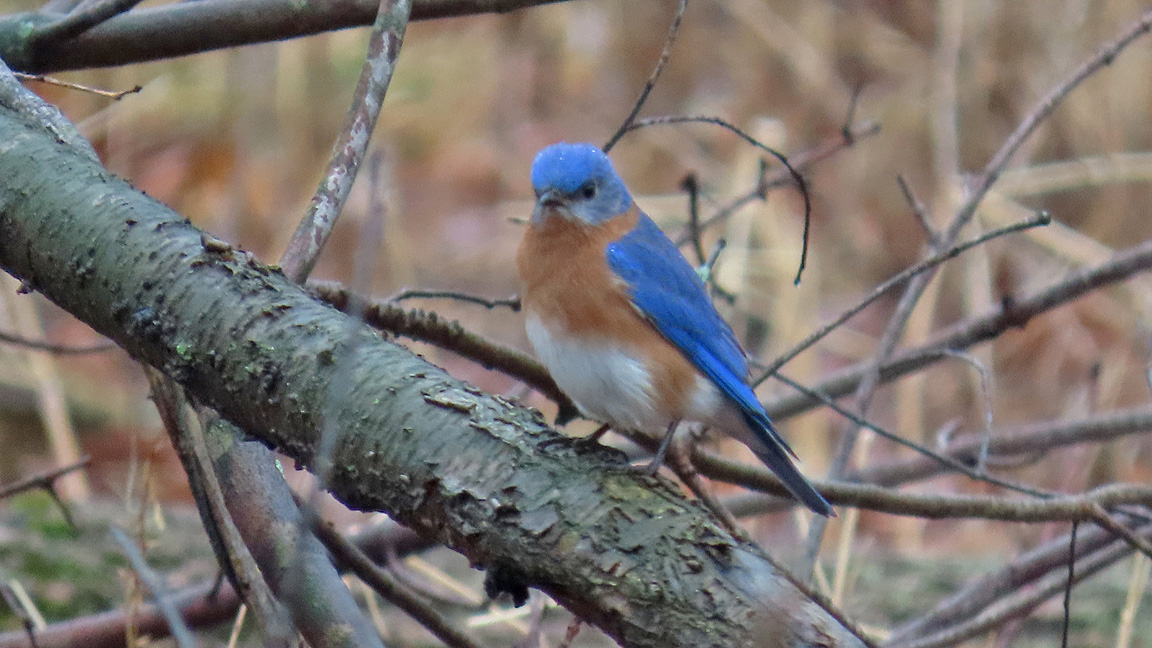
Most prominent in the open forest was a nice group of EASTERN BLUEBIRDS, with at least 15 present. Woodland birds included RED-BELLED, DOWNY and HAIRY WOODPECKERS, NORTHERN FLICKER, BLACK-CAPPED CHICKADEE, WHITE-BREASTED and RED-BREASTED NUTHATCHES, a BROWN CREEPER, BLUE JAYS, and AMERICAN CROWS. Briefly spotted in the trees, but unfortunately missed by many, was one of our target birds — a GREAT TIT. Other birds included CANADA GOOSE, a flyover COMMON MERGANSER, KILLDEER, a GREAT BLUE HERON, and a BALD EAGLE, and heard in the distance was a pair of SANDHILL CRANES.
Our final stop (following a restroom break) was in Port Washington, at Coal Dock Park. The first birds spotted was a group of four SNOW GEESE, and we also found CANADA GOOSE, MALLARD, REDHEAD, GREATER and LESSER SCAUP, LONG-TAILED DUCK, BUFFLEHEAD, COMMON GOLDENEYE, and COMMON MERGANSER. Swimming just beyond the harbor entrance were several RED-THROATED LOONS, and a HORNED GREBE was also spotted, along with a few AMERICAN HERRING GULLS.
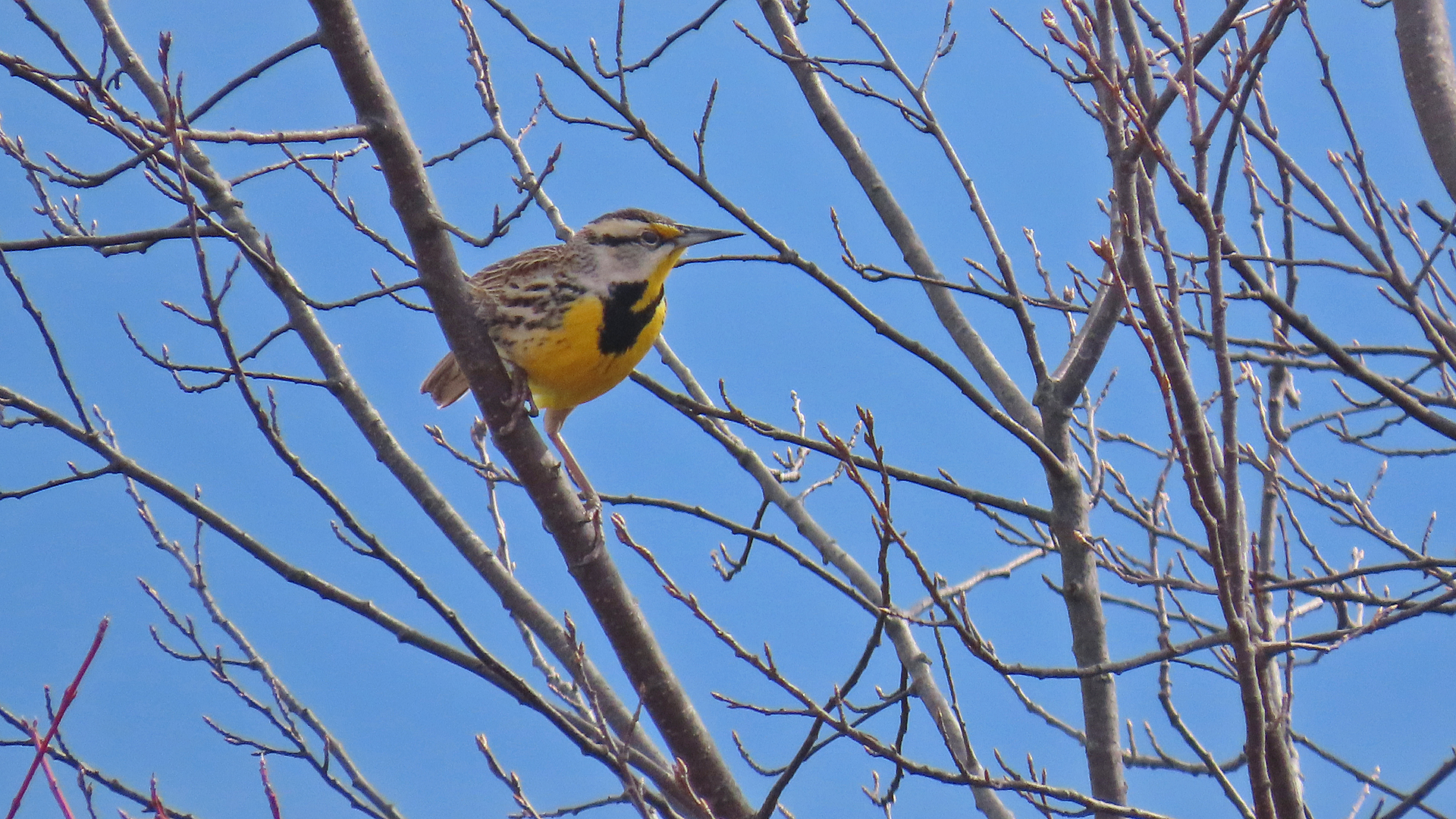
A nice surprise was an EASTERN MEADOWLARK that perched in and flew between several small trees, and a SONG SPARROW was singing nearby. Up on the nearby power plant, and for a while perched next to its nest box was a PEREGRINE FALCON, which provided a very nice conclusion to our morning!
Thanks to all who participated in our fun morning, and to Jeff Baughman for co-leading. Our bird total for this field trip was 52 species, and the eBird Trip Report can be viewed at: https://ebird.org/tripreport/485507
Tom Schultz, WSO Field Trips